
Return to Blog
Is Protein Enough of a Brand Through Line?
For decades, food brands expanded in ways that felt obvious.
A yogurt company launched more yogurt. A cereal brand moved into granola. A condiment company stretched into neighboring pantry staples. The logic was simple: stay close to what consumers already trust you for. Categories defined brands, and adjacency determined growth.
But something appears to be shifting.
Increasingly, consumers are not shopping for foods as much as they are shopping for outcomes – more energy, better digestion, mental clarity, and longevity. The organizing principle of consumption is becoming less about what something is and more about what it does.
Which raises an interesting question: can a company’s through line simply be a function, .ie protein?
At first glance, the answer feels obvious. Protein is no longer just a macronutrient; it has become a cultural signal. Protein-maxxing has moved from gym culture into the mainstream. Consumers now seek it in cereal, pasta, popcorn, desserts, coffee creamers, chips, ice cream, soda, and more. Entire grocery aisles are quietly reorganizing themselves around one promise: more protein.
Yet building a brand around protein is fundamentally different from building one around an ingredient or category.
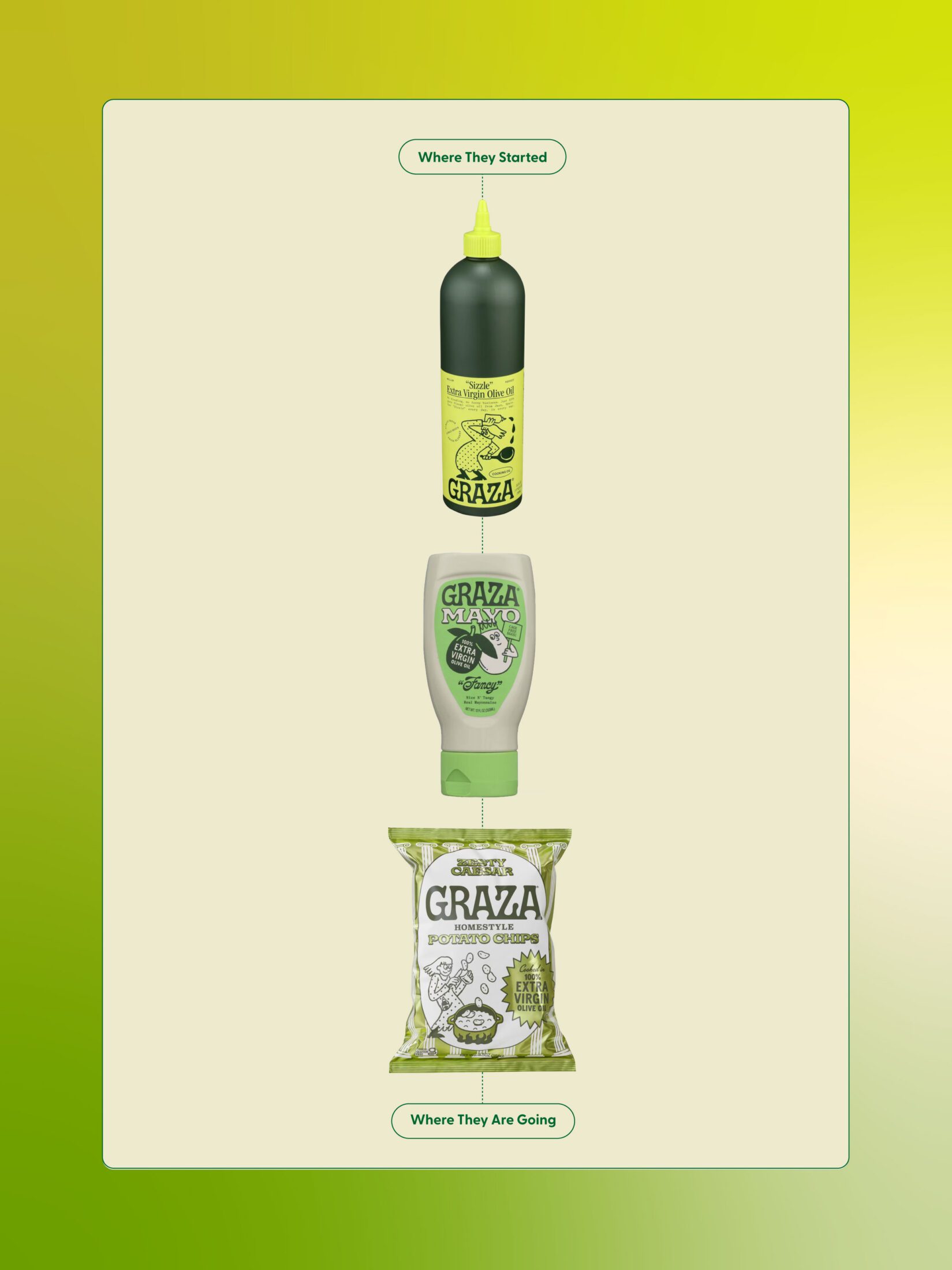
Take Graza. Its expansion feels intuitive because it remains rooted in olive oil, not simply as an ingredient, but as a worldview. Mayo and aioli make sense. Even potato chips feel coherent because olive oil remains central to the story, taste, and function of the product. The brand stretches, but never snaps.
Protein is trickier.
Unlike olive oil, protein does not define flavor, ritual, or format. It defines utility. A protein shake, protein bar, protein cookie, burger, fish filet, or popcorn may all promise the same nutritional outcome while existing in entirely different behavioral contexts. They are eaten differently, purchased differently, and emotionally understood differently.
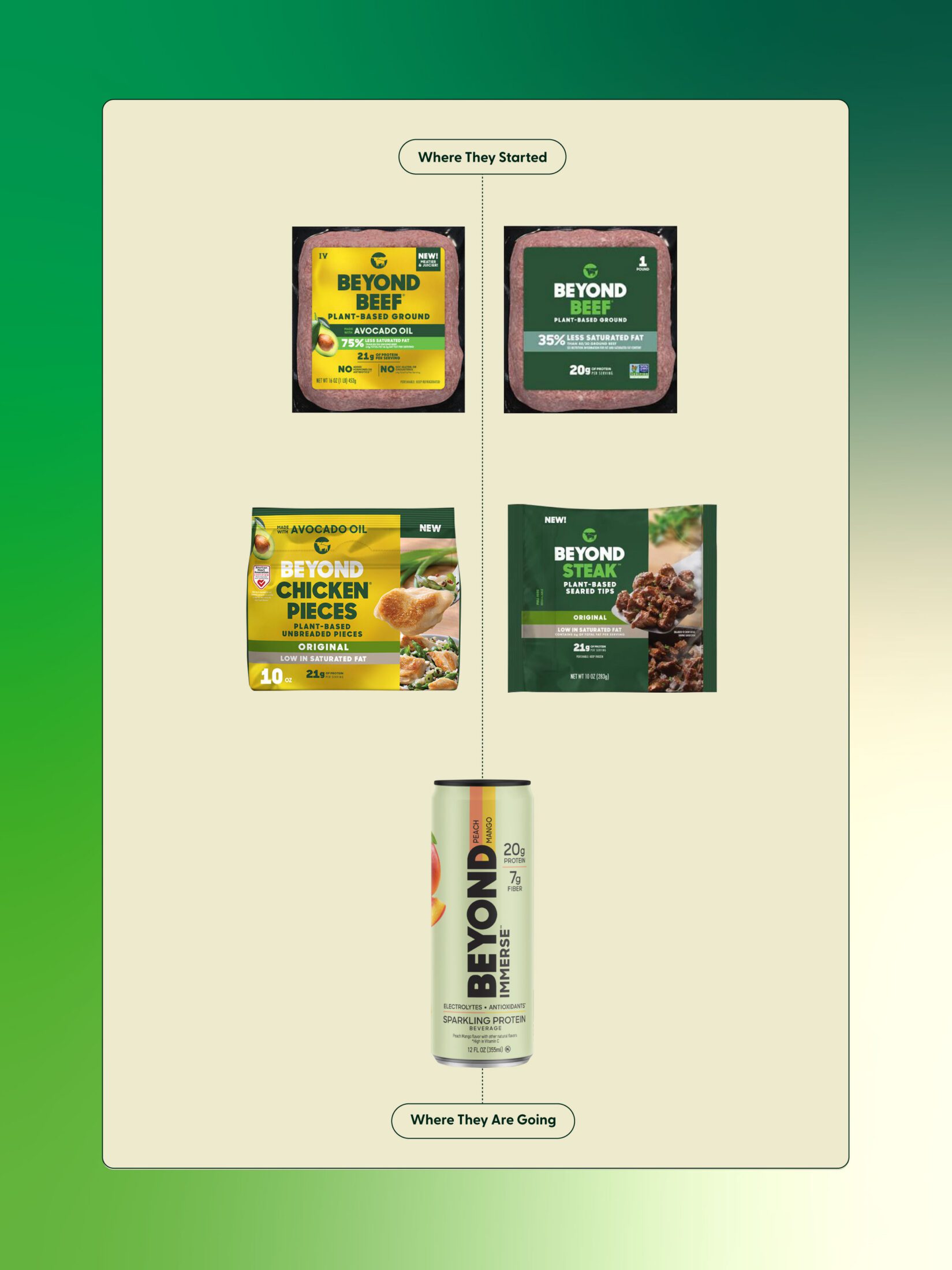
Which is why Beyond Meat’s potential evolution feels so fascinating.
As the cultural conversation shifts away from plant-based alternatives and toward protein-maxxing, Beyond Meat finds itself at an interesting crossroads. A move into protein beverages makes perfect sense on paper. The market is there. The demand is there. But would it feel believable?
There is a difference between strategic adjacency and strategic desperation, and consumers are remarkably good at sensing it. A protein beverage could read as a natural evolution of Beyond Meat’s mission, a broader repositioning around alternative protein. Or it could feel like a company trying to outrun declining relevance by attaching itself to whatever consumers currently want more of.
The distinction matters.

David presents an equally interesting example. What started as a protein bar brand from the founder of RXBAR recently expanded into wild-caught Atlantic cod. On paper, the logic is coherent: high-protein, nutrient-dense foods for health-conscious consumers. But it also feels strangely dissonant. Are consumers buying into a seafood brand, a snack brand, or something else entirely?
Then, shortly after launching its Atlantic cod, David introduced a line of protein ice cream in four flavors, reminiscent of the Halo Top craze that helped define an earlier era – low calorie indulgence. The launch reportedly sold out in just 28 minutes.
Taken individually, protein bars, tinned fish, and ice cream have little in common. Traditionally, they occupy completely different aisles, occasions, and consumer mindsets. Yet viewed through the lens of protein, they suddenly become part of the same ecosystem. David isn’t building a snack brand, a seafood brand, or a dessert brand. It’s building a protein brand.
In many ways, David may be one of the clearest examples of where CPG is potentially heading. The company is treating protein not as a claim attached to a product, but as the foundation of the entire business. Every new launch reinforces the same promise, regardless of category. Consumers aren’t buying cod because David sells fish; they’re buying cod because David has earned credibility in protein. Or that is the hope.
For most of modern CPG history, companies competed within aisles and shelf space. Today, they may increasingly compete around ambitions. Protein for strength and satiety. Fiber for gut health. Hydration for performance. Focus for productivity. Sleep for recovery. Longevity for optimization.
In that world, the future competitor set for a protein bar is not another protein bar, it is anything promising the same outcome.
This shift would fundamentally change how brands are built. Authority would no longer come from expertise in a category but credibility within a consumer need-state. A successful protein company could theoretically move from shakes to snacks to frozen meals to seafood to supplements, provided consumers believe the brand owns the problem it claims to solve.
But belief is the hard part.
A functional claim alone is not a brand strategy. Consumers do not trust companies simply because they repeat the same nutrition callout across packaging. “High protein” is easy to copy. What is harder to build is coherence: a worldview, a philosophy, a reason that expansion feels inevitable instead of opportunistic.
That may ultimately be the test of this next generation of CPG brands. Not whether protein can stretch across categories, it clearly can, but whether companies can make that stretch feel emotionally and strategically credible.
If they succeed, protein may be only the beginning.
The next decade of food could belong not to snack brands or beverage brands, but to outcome brands: fiber brands, focus brands, gut-health brands, recovery brands. Brands built not around what sits in the package, but around what consumers hope happens after they consume it.
And if that sounds far-fetched, consider this: grocery stores were once organized around ingredients. Then categories. The next organizing principle may simply be human optimization.