
Return to Blog
A History of Private Label

November, for many, is a month of gratitude and introspection. It’s a time to reflect on our past – how did we get here?
For The Creative Pack, the same question is true. We are here thanks to the success of the private label industry over the last 30 years. And this makes us wonder, where did Private Label come from? And when?
The concept of ‘Private label’ is so much more than just a retailer business strategy. It’s closely linked to our history, our humanity, and constant need to evolve and improve as a society. It’s a direct reflection of our economy and consumer needs. Private label was born out of a need to take back consumer control.
Private label products date back to the early 1800s. They are defined as ‘products retailers produce or acquire from third-party manufacturers to sell under their own brands.’ Private labels started off with a brand identity – a merchant who put his own name on a product obviously took pride in that item. This was a common practice in the late 19th century.
According to Phillip B. Fitzell’s Private Labels: Store Brands & Generic Products, “In the nineteenth century, merchants dealing in the mail order and/or retail-wholesale business recognized the need for lower priced merchandise, but of high quality … Market conditions at the time were not favorable for the consumer”
What was the very first private label ever?
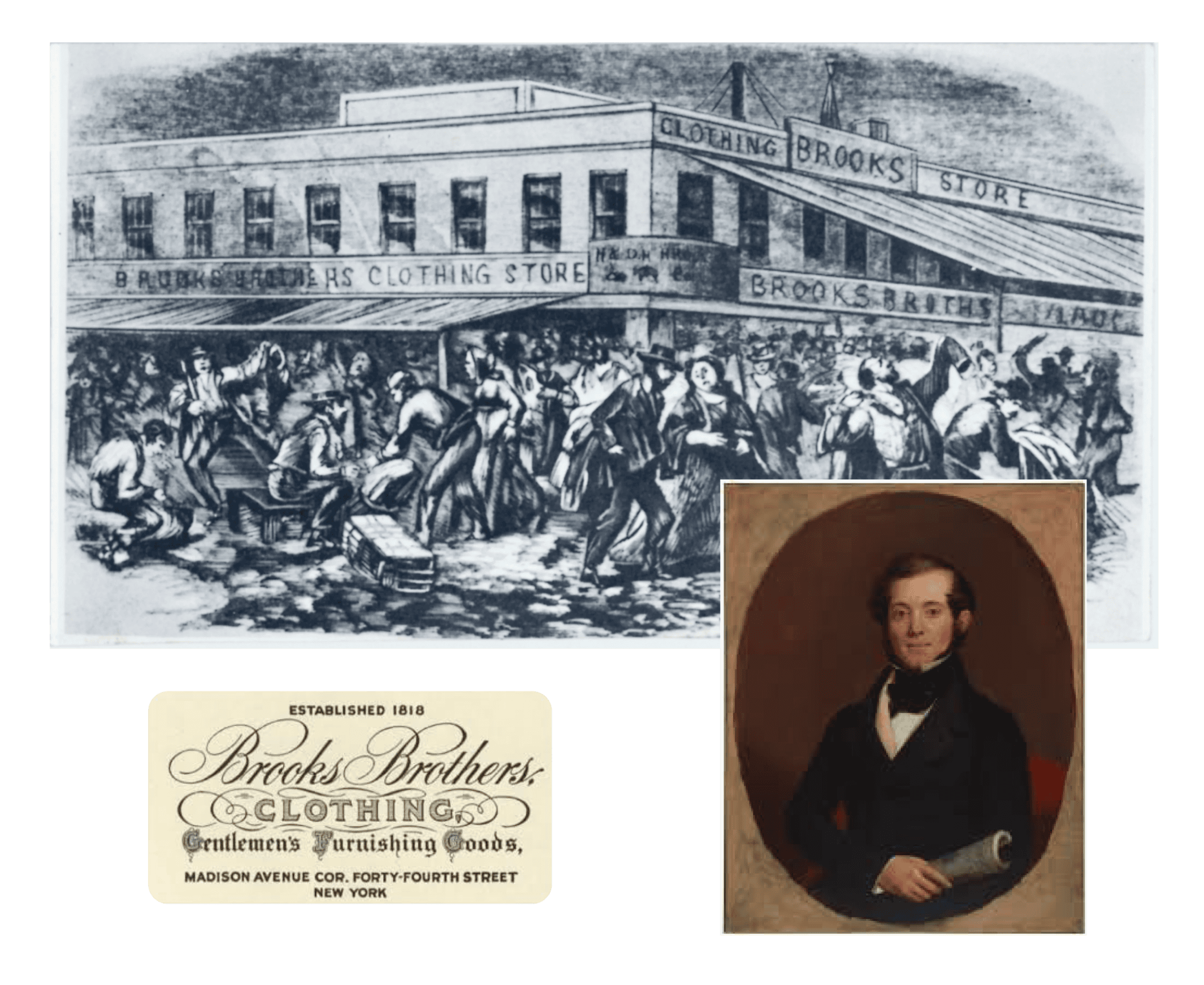
In 1818, Henry Sands Brooks in NYC is often credited as creating the first ready-made garments under his own name, later taking the name Brooks Brothers.
Henry’s private label began by innovating lightweight summer suits and cotton blended shirts, a novel idea at the time. Brooks Brothers offered consumers a choice between shirts produced to a manufacturer’s specifications and its blended cotton shirts. As a result, the enhanced product variety fostered greater economic welfare.
Private Label at this time was so deeply American, that it outfitted the United States President Abraham Lincoln. At his second inauguration, Lincoln wore a coat specially crafted for him by Brooks Brothers. Hand-stitched into the coat’s lining was a design featuring an eagle and the inscription, “One Country, One Destiny”.
The growth of private labels in the food industry accompanied that of the clothing industry.
Who were the pioneers of food & beverage private label?
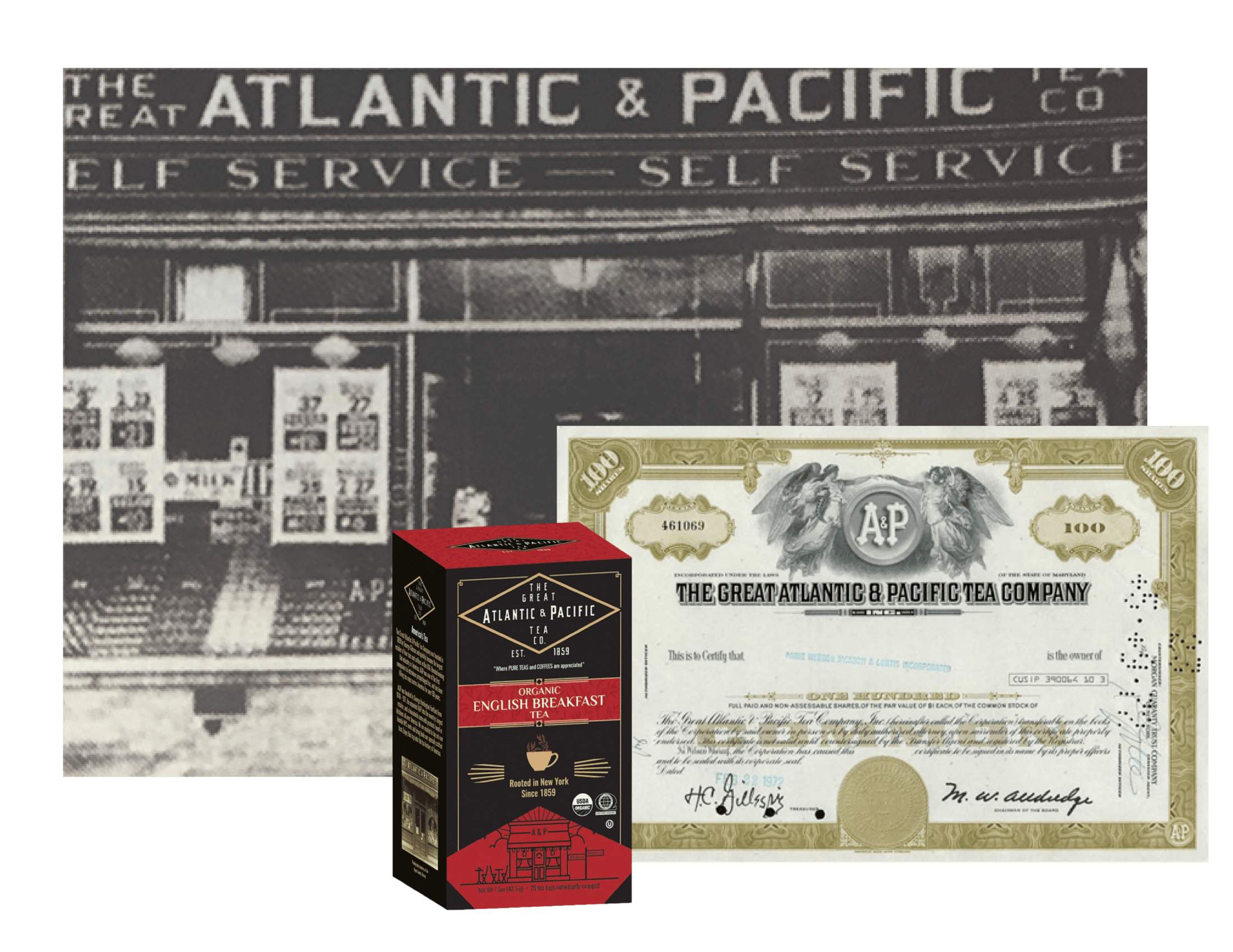
The earliest widely recognized private label is thought to be Eight O’Clock Coffee, introduced by the Great Atlantic & Pacific Tea Company (A&P) in 1859.
‘The name was later formalized in 1919 as ‘8 O’Clock’ after a survey found that 8 AM and 8 PM were the most popular times for drinking coffee. Eight O’Clock Coffee is significant because it marked a shift from purely generic goods to branded store products, laying the groundwork for today’s extensive private label lines.
By the 1950s, Private labels in the food product industry expanded to perishable and nonperishable goods. A retailer’s top 10 most important private label products were all in the food category. Regular coffee was the number one most purchased private label product of this time period – margarine, number two.
Today, almost every consumer product is available in both branded and private label versions. Private label boasts a price tag 20-30% less than brand name products, it’s a counter-inflationary force. And most importantly, private label boosts consumer welfare through lower prices and greater choices.
It’s wild to think the private label industry dates back to our 16th President – to think that private label finds growth in the darkest seasons of life is our silver lining. A hopeful message as we transition into December.
Timeline of Private Label in the US
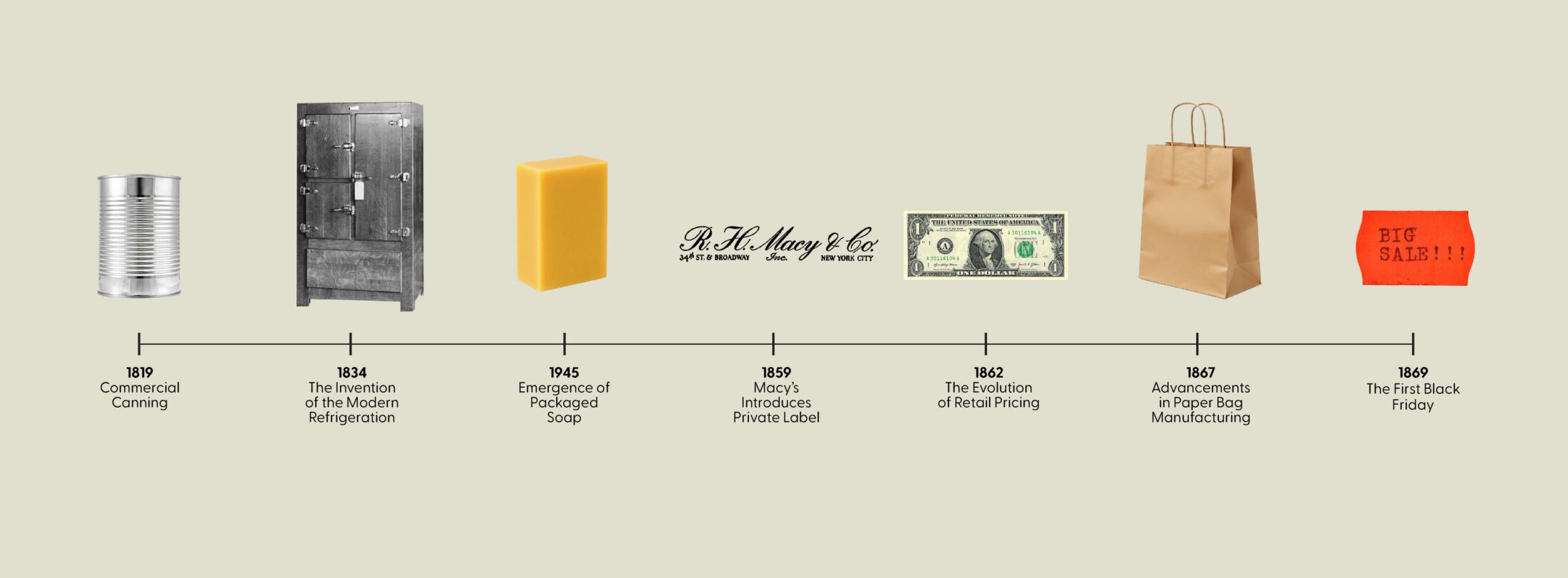
1819 – The Beginnings of Commercial Canning
William Underwood establishes an early commercial food preservation operation in Boston, laying the groundwork for packaged foods and extending product shelf life.
1834 – The Invention of Modern Refrigeration
Jacob Perkins patents an early vapor-compression refrigeration system, paving the way for advancements in food preservation, storage and distribution.
1845 – The Emergence of Packaged Soap
The introduction of packaged soap marks an early milestone in the evolution of consumer packaged goods and branded household products.
1847 – Smith Brothers & the Birth of Branded Packaging
Smith Brothers cough drops become an early example of factory-packaged consumer goods. The emergence of imitation products prompts the brothers to protect their brand through trademarking, recognizing the commercial value of a distinctive brand name and packaging.
1858 – Macy’s Is Founded
Rowland Hussey Macy opens a fancy dry goods store in New York City, laying the foundation for one of America’s most recognizable department stores.
1859 – Macy’s Introduces Private Label
Macy’s advertises its own line of hoopskirts, offering products at competitive prices. Its early private label strategy demonstrates how retailers can differentiate themselves through exclusive merchandise and value.
1860s–1890s – American Indian Wars
Continued westward expansion and conflicts between the U.S. government and Indigenous nations reshape the country’s geographic, economic and social landscape.
1861–1865 – American Civil War
1862 – The Evolution of Retail Pricing
Retail pioneer A.T. Stewart helps popularize fixed pricing and marked prices, moving away from traditional bargaining practices and creating a more standardized and transparent shopping experience.
1867 – Advancements in Paper Bag Manufacturing
Luther Childs Crowell contributes to the development of paper bag manufacturing, advancing practical and scalable packaging solutions for retailers.
1869 – The First “Black Friday”
The term “Black Friday” is used to describe the financial panic of September 24, following the collapse of the U.S. gold market, long before its association with retail shopping.
1870s – America’s Industrial Revolution Accelerates
Advancements in manufacturing, transportation and mass production transform the American economy, enabling the large-scale production and distribution of consumer goods.
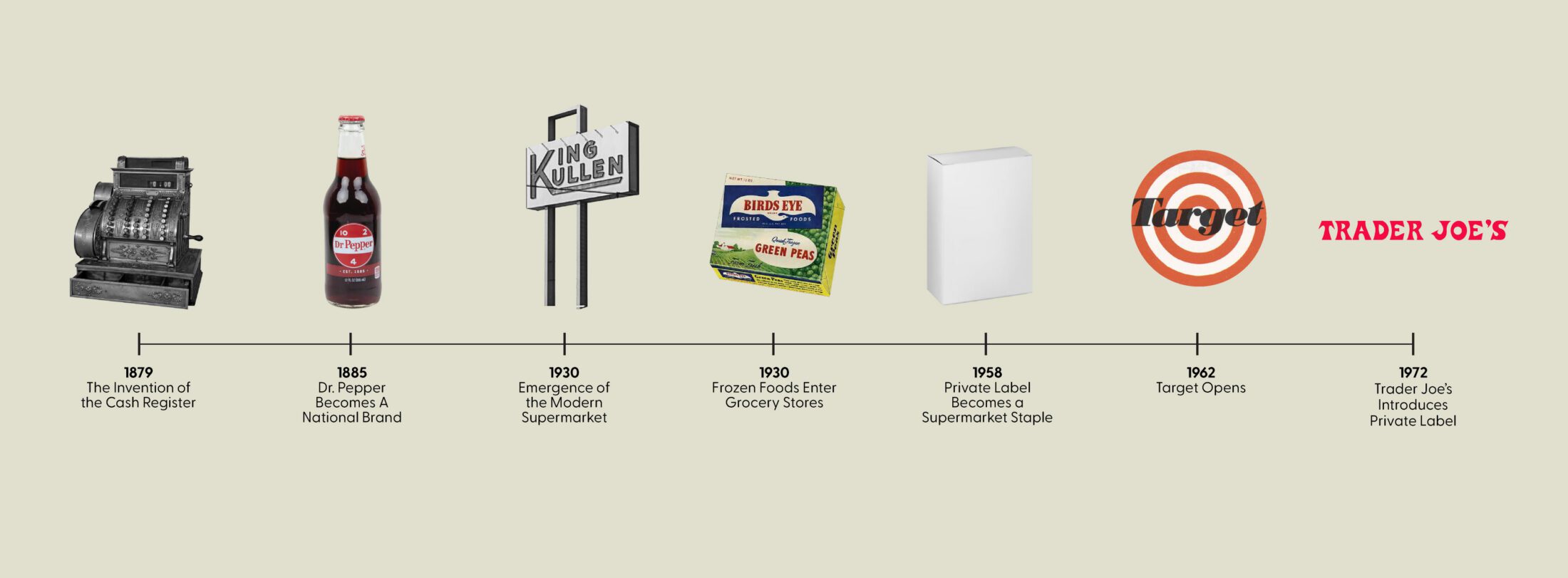
1879 – The Invention of the Cash Register
James Ritty invents an early mechanical cash register, revolutionizing retail transactions and improving the accuracy and efficiency of store operations.
1885 – Dr. Pepper Is Introduced
Dr. Pepper debuts at Morrison’s Old Corner Drug Store in Waco, Texas, illustrating how a locally developed, retailer-exclusive product can evolve into a nationally recognized brand.
1890s – Labor & Industrial Unrest
Labor disputes and regional conflicts reflect growing social and economic tensions within a rapidly industrializing American society.
1890s–1900s – A New Era of Consumer Brands
The emergence and growth of brands such as Pillsbury, Kellogg’s, Maxwell House and Purina transform the consumer goods landscape. Alongside national brands, private label development gains momentum as retailers seek to differentiate their offerings.
1930 – The Emergence of the Modern Supermarket
King Kullen opens in New York, pioneering a large-scale, self-service grocery model that transforms the American shopping experince.
1898 – Brad’s Drink Becomes Pepsi-Cola
Originally developed and sold by pharmacist Caleb Bradham in his drugstore, Brad’s Drink is renamed Pepsi-Cola and begins its evolution from a locally sold product into a national beverage brand.
1898 – Spanish-American War
1917–1918 – U.S. Involvement in World War I
1920s – The Birth of Modern Frozen Foods
Clarence Birdseye pioneers quick-freezing technology, revolutionizing food preservation and creating new opportunities for packaged food manufacturing and grocery retail.
1930s – Retailers Invest in Private Label Manufacturing
As retailers seek greater control over product availability, quality and pricing, many invest in their own manufacturing capabilities. Safeway, for example, operates dozens of manufacturing facilities and develops an extensive portfolio of private label brands.
1930s – Frozen Foods Enter Grocery Stores
General Foods brings Birds Eye frozen products to grocery stores, introducing consumers to a new category of convenient, commercially frozen foods.
1941–1945 – U.S. Involvement in World War II
1950–1953 – Korean War
1950s–1960s – Black Friday Takes on a Retail Meaning
Philadelphia police use the term “Black Friday” to describe the heavy traffic and crowds following Thanksgiving. The term eventually becomes synonymous with one of the biggest shopping days of the year.
1955–1975 – Vietnam War
1958 – Private Label Becomes a Supermarket Staple
Approximately 84% of supermarkets report carrying private label products, demonstrating the widespread adoption of retailer-owned brands.
1962 – Target Opens
Target opens its first store, later entering the private label space in 1984 with the introduction of its Honors apparel line.
1965 – Private Label Gains Market Share
Private label products account for approximately 20% of annual sales volume, establishing store brands as a significant competitor to national brands.
1970s – Private Label Expands Beyond Grocery
Private label extends across food, beauty, apparel and home electronics. Retailers increasingly invest in product quality and development, creating a cycle of competition and innovation between store brands and national brands.
1972 – Trader Joe’s Introduces Private Label
Founder Joe Coulombe introduces Trader Joe’s first private label product, granola. Over time, private label grows to represent approximately 80% of the retailer’s assortment, becoming central to its identity.
1978 – Mother’s Market & Kitchen Is Founded
Founded in Costa Mesa, California, Mother’s Market & Kitchen focuses on organic and vegetarian foods, fresh juices and health-conscious lifestyle products.
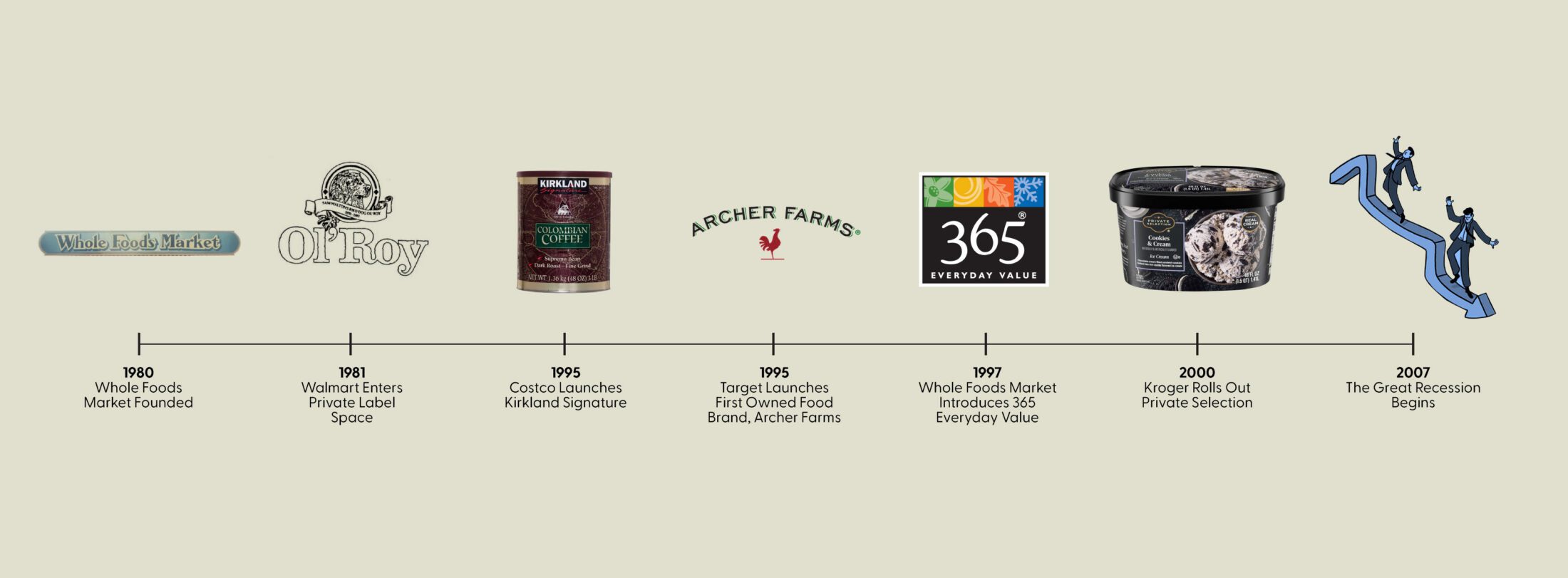
1980 – Whole Foods Market Is Founded
Whole Foods Market opens in Austin, Texas, following the merger of two natural food stores, SaferWay and Clarksville Natural Grocery, helping bring natural and organic foods into the mainstream.
1981 – Walmart Enters the Private Label Space
Walmart introduces Ol’ Roy dog food, marking an early milestone in the development of its private label portfolio.
1983 – Costco Opens
Costco opens its first warehouse in Seattle, Washington, establishing a membership-based retail model centered around quality, value and bulk purchasing.
1990 – Gulf War Begins
Geopolitical instability, rising oil prices and economic uncertainty put pressure on consumer spending.
1993 – Walmart Launches Great Value
Walmart introduces Great Value, which grows to become its largest private label brand, spanning grocery and household essentials.
1995 – Costco Launches Kirkland Signature
Costco consolidates its private label offerings under Kirkland Signature, building a brand synonymous with quality and value across a diverse range of categories.
1995 – Target Launches Its First Owned Food Brand
Target introduces Archer Farms, its first private label food brand, offering everyday grocery staples such as bread, milk and pasta, laying the foundation for its growing private label grocery portfolio.
1997 – Whole Foods Market Introduces 365 Everyday Value
Whole Foods Market expands accessibility to natural and organic products through its value-driven private label brand.
2000 – Kroger Expands Private Selection
Kroger rolls out Private Selection across its family of stores, positioning it as its flagship premium private label and demonstrating that store brands can compete beyond price.
2001 – War in Afghanistan Begins
2003 – Iraq War Begins
2007 – The Great Recession Begins
Financial pressures reshape grocery shopping habits as consumers cook more at home, seek out lower-cost retailers and increasingly turn to private label products.
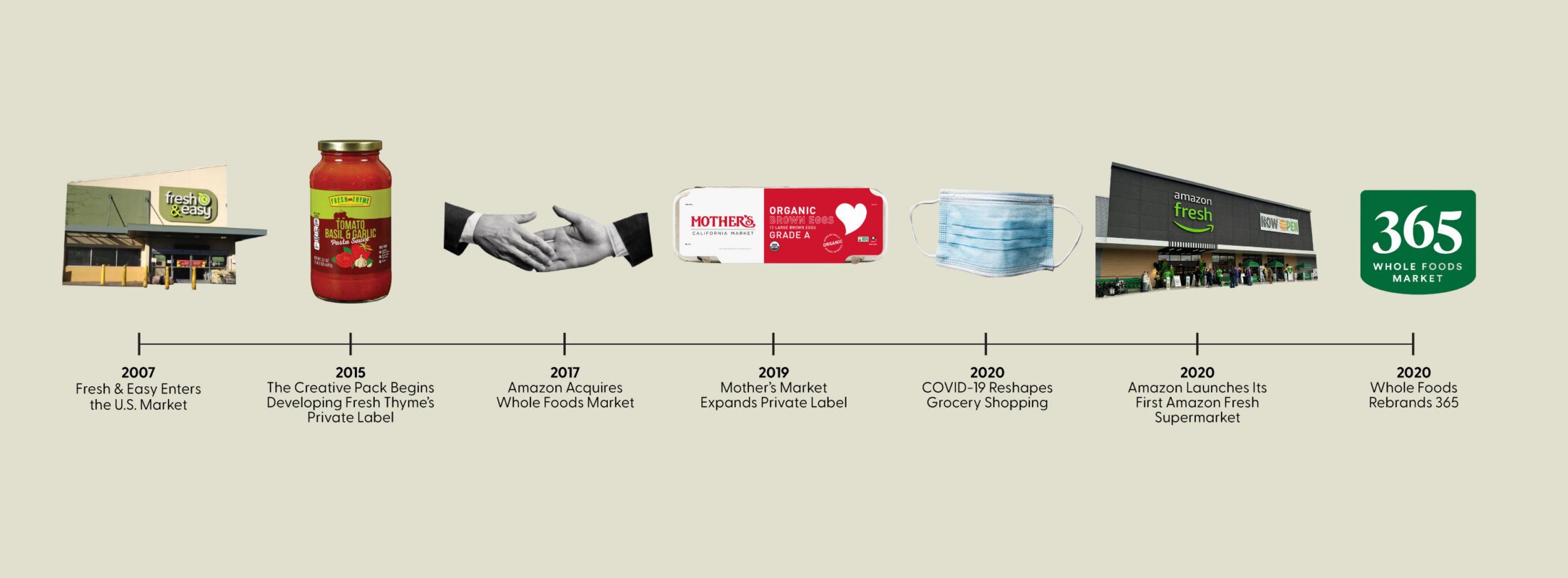
2007 – Fresh & Easy Enters the U.S. Market
UK retailer Tesco launches Fresh & Easy, a small-format neighborhood grocery chain centered around convenient, private label prepared meals and everyday essentials.
2009 – Target Launches up&up
Target introduces up&up, its own brand spanning personal care, over-the-counter health products and household essentials.
2012 – Kroger Launches Simple Truth
Kroger introduces Simple Truth, making organic, natural and “free-from” products more accessible to mainstream consumers.
2014 – The Creative Pack Is Born
The Creative Pack is founded, bringing strategic branding and packaging design to the evolving private label and CPG landscape.
2015 – The Creative Pack Partners with Fresh Thyme
The Creative Pack begins developing Fresh Thyme’s private label program, going on to design more than 1,000 SKUs across a diverse range of grocery categories.
2015 – Fresh & Easy Closes
Fresh & Easy announces the closure of its remaining stores, highlighting the challenges of establishing a new grocery retail model in the U.S. market.
2015 – Online Retailer, Thrive Market, Introduces Private Label
One year after launching, online retailer Thrive Market introduces its own organic coconut oil. Its private label portfolio evolves to span pantry staples, wine, supplements, frozen foods, household essentials and beauty products.
2016 – Whole Foods Market Introduces 365 Store Concept
Whole Foods Market opens its first 365 by Whole Foods Market store in Silver Lake, Los Angeles. The smaller-format grocery concept emphasizes its 365 Everyday Value brand, offering more affordable natural and organic products to attract younger, value-conscious shoppers.
2017 – Amazon Acquires Whole Foods Market
Amazon’s acquisition of Whole Foods Market reshapes the grocery landscape, integrating Prime benefits, lowering prices on select products and expanding grocery delivery and pickup capabilities.
2019 – Target Launches Good & Gather
Target debuts Good & Gather with 650 food and beverage products. The brand grows to encompass more than 2,000 SKUs, becoming a cornerstone of Target’s grocery strategy.
2019 – Mother’s Market Expands Its Private Label Program
Following its acquisition by Mill Road Capital in 2016 and new leadership, Mother’s Market accelerates its private label strategy, adding more than 250 organic products to its assortment.
2020 – COVID-19 Reshapes Grocery Shopping
Supply chain disruptions and national brand shortages encourage consumers to try private label alternatives. Financial strain and economic uncertainty further accelerate demand for value-driven store brands.
2020 – Whole Foods Market Rebrands 365
Whole Foods Market drops “Everyday Value” from its 365 private label brand, moving away from explicitly value-led branding.
2020 – Amazon Opens Its First Amazon Fresh Supermarket
Amazon opens its first Amazon Fresh supermarket in Woodland Hills, Los Angeles, combining traditional grocery shopping with innovative retail technology, competitive pricing and private label offerings, further expanding its physical retail presence.

2021 – The Creative Pack Partners with Earth Fare
Natural and organic grocery retailer Earth Fare partners with The Creative Pack to redesign and strengthen its private label program.
2021 – Target Launches Favorite Day
Target introduces Favorite Day, an indulgence-led food and beverage brand spanning sweet and savory snacks, bakery items, ice cream and beverage mixers.
2022 – Gopuff Enters the Private Label Space
Quick-commerce platform Gopuff introduces Basically, a range of everyday essentials, followed by Goodnow, an over-the-counter health and wellness brand. Both are designed in partnership with The Creative Pack, demonstrating the growing role of private label beyond traditional grocery retail.
2023 – Erewhon Expands Its Own-Brand Offerings
Following investment from Stripes in 2019 and expanded shipping capabilities in 2023, Erewhon continues to develop its premium own-brand portfolio, extending beyond grocery and prepared foods into supplements, wellness and lifestyle products.
2024 – Walmart Launches bettergoods
Walmart introduces its largest private label food launch in over 20 years, debuting approximately 300 chef-inspired, trend-forward products. The brand reflects a shift toward culinary innovation and a younger, more trend-conscious consumer.
2024 – Target Reinvents up&up
Target refreshes its established private label brand through redesigned packaging, product reformulations and an expanded assortment.
2025 – Amazon Launches Amazon Grocery
Amazon consolidates products from its Amazon Fresh and Happy Belly brands under Amazon Grocery, creating a unified private label portfolio of more than 1,000 grocery essentials.
2025 – Private Label Sales Reach Record Highs
According to the Private Label Manufacturers Association (PLMA), U.S. store brand sales reach a record $282.8 billion, an increase of $9 billion from the previous year.
2026 – Private Label Continues to Gain Market Share
U.S. store brands account for approximately 21% of grocery dollar sales, reinforcing their position as a major competitive force alongside national brands.
An innovation dance that still continues today!